- Home
- About Us
-
Our Services
-
Basement Waterproofing
- Residential Basement Waterproofing
- Commercial Basement Waterproofing
- Basement Sump Pump System
- Sump Pump Battery Backup
- Hydrostatic Pressure Waterproofing
- Dehumidifier Services
- Basement Ventilation
- Air Purification Services
- Crystalline Cement Injection
- Waterproof Stone Flooring
- Egress Windows
- Basement Finishing
- French Drain Installation
- Basement Wall Crack Repair
- Vapor Barriers
- Foundation Repair
- Roof Waterproofing
-
Basement Waterproofing
- Service Areas
- Resources
- Our Blog
How Roof Leaks Secretly Cause Basement Water Damage in NYC
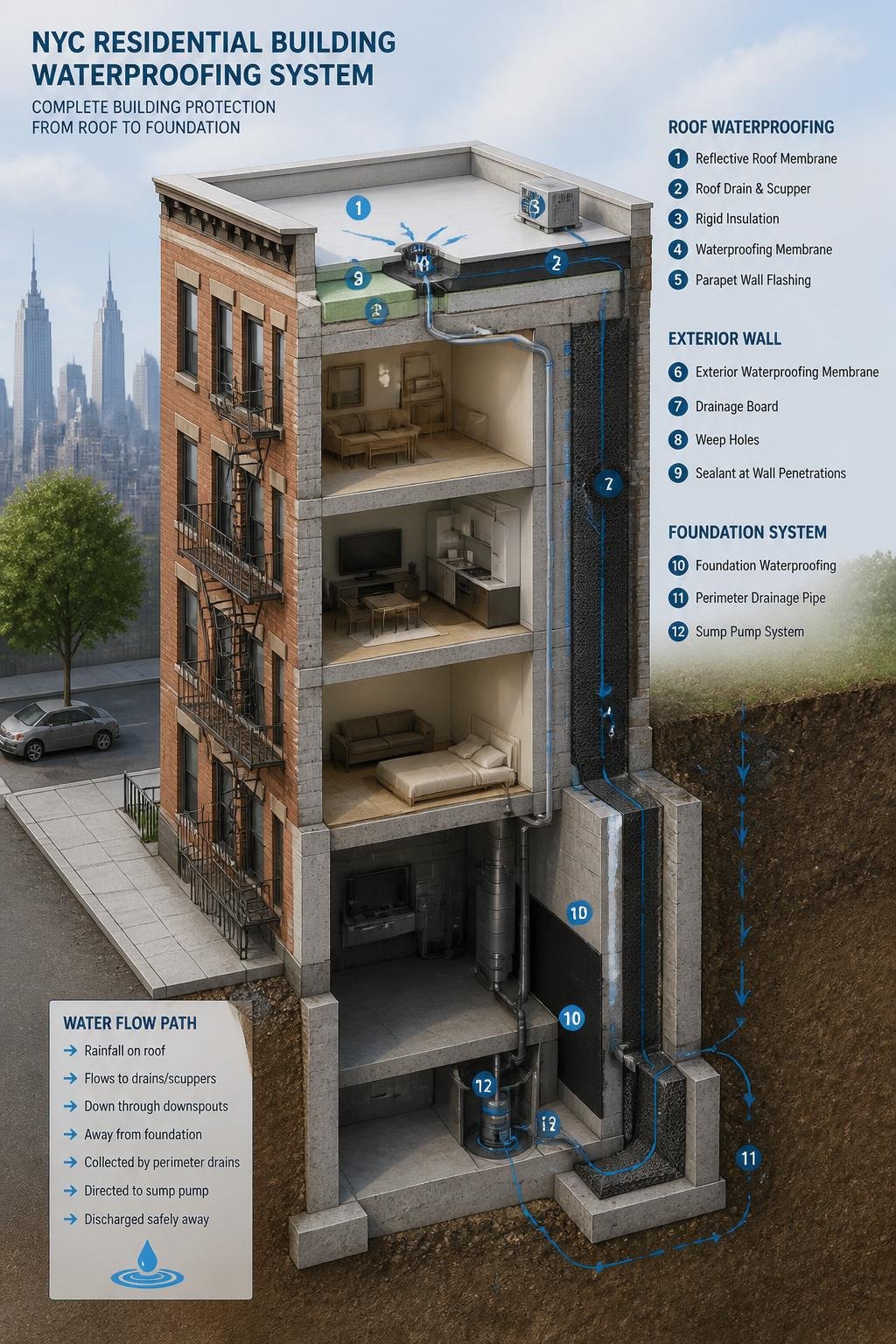
If you’re reading this because your basement keeps getting damp, musty, or slightly wet after rain, we want you to consider something most homeowners in NYC overlook:
Your basement problem may not actually start in your basement.
It may be coming from above you.
In many homes across NYC, water doesn’t enter only from the ground. It also enters from the roof, travels slowly through the structure, and eventually shows up at the lowest point which is almost always the basement.
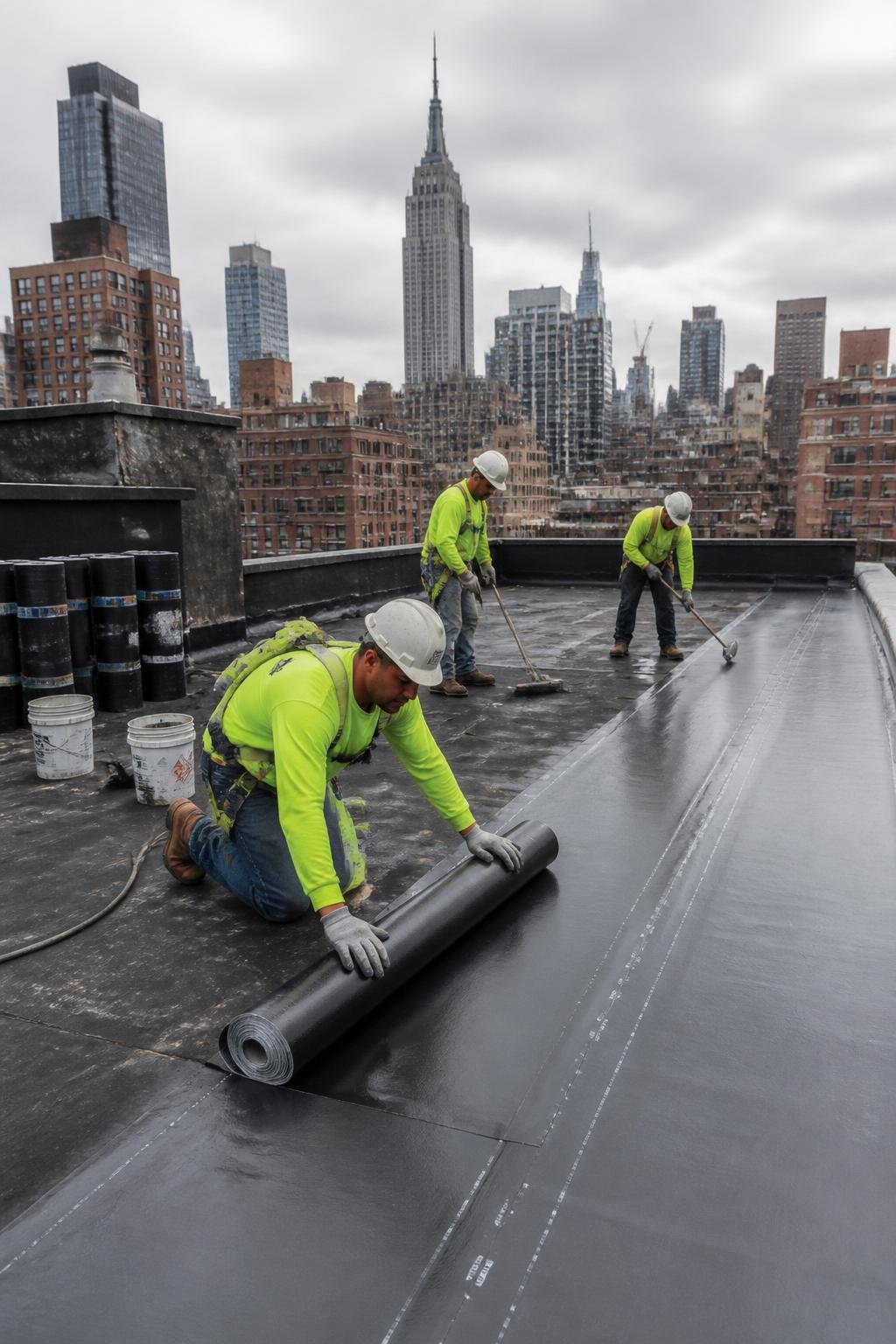
So when we talk about roof waterproofing, we’re not just talking about preventing ceiling leaks. We’re talking about protecting the entire structure from a top-down water movement system that can quietly damage your home for years.
What most NYC homeowners don’t realize about roof leaks?
When people think of roof leaks, they imagine dripping water from the ceiling during heavy rain.
But in reality, roof water intrusion is often slow and silent.
It usually starts with:
- small cracks in roofing material
- weak sealing around edges or joints
- clogged drainage points on the roof
- aging waterproof layers that no longer repel water properly
At first, nothing looked serious. You might not even see water inside your home.
But water doesn’t need to flood your space to cause damage. It only needs a path and once it finds one, it never stays in one place.
How roof water quietly reaches your basement?
This is where most homeowners get surprised.
Water that enters from the roof doesn’t just stay in the roof area. It moves.
It travels through:
- ceiling insulation layers
- wall cavities and hidden structural gaps
- vertical masonry or concrete paths
- spaces around pipes, wiring, and structural joints
And because gravity always pulls downward, that moisture slowly migrates through your home until it reaches the lowest point.
In NYC homes, especially older buildings, that lowest point is often the basement. So even if your basement looks like the problem area, the real source may be several floors above.
Signs your roof may already be affecting your basement
Roof-related water problems don’t always show up where you expect them. You need to look for indirect signs across the building.
If you notice any of the following, it’s worth paying attention:
1. Ceiling stains or soft patches upstairs
If you see brown, yellow, or uneven stains on ceilings, it means water has already entered the structure above your living space.
2. Peeling paint on upper walls
Moisture moving through walls from the roof often shows up as bubbling or peeling paint sometimes far from the actual entry point.
3. Basement feels humid even without visible leaks
This is one of the most confusing signs. You may not see water, but the air in your basement feels heavy, damp, or slightly uncomfortable.
That often means moisture is traveling through the structure rather than entering directly.
4. Musty smell that spreads between floors
A persistent smell that doesn’t go away after cleaning usually means trapped moisture inside walls or structural materials.
In many NYC homes, this smell slowly moves downward over time.
5. Mold appearing in unexpected places
If mold shows up on upper floors and later appears in the basement, it’s a strong sign that moisture is moving through the entire structure, not staying in one area.
Why does roof water become a basement problem in NYC homes?
NYC buildings are unique. Many are older, closely built, and made with materials that absorb moisture over time.
Once water enters the structure from the roof, it doesn’t have many escape routes. Instead, it gets trapped inside walls and slowly moves downward.
This is especially common in:
- pre-war buildings
- brick or masonry structures
- homes with aging roof systems
- properties with limited roof drainage maintenance
Over time, even small roof leaks can contribute to:
- basement humidity problems
- recurring damp walls
- musty odor issues
- slow structural weakening
That’s why roof waterproofing is not separate from basement protection, it’s part of the same system.
Why does roof waterproofing fail in many NYC properties?
Roof waterproofing often fails for the same reason basement waterproofing fails it is treated as a surface fix instead of a full system.
Common issues include:
- sealing visible cracks but ignoring hidden weak areas
- allowing water to pool on flat roof sections
- not maintaining drainage outlets regularly
- applying coatings over damaged or aged layers instead of repairing the base
The result is temporary protection that breaks down under real weather conditions.
And in NYC, the weather is not gentle, heavy rain, snow load, and freeze-thaw cycles constantly test roofing systems.
What proper roof waterproofing actually does?
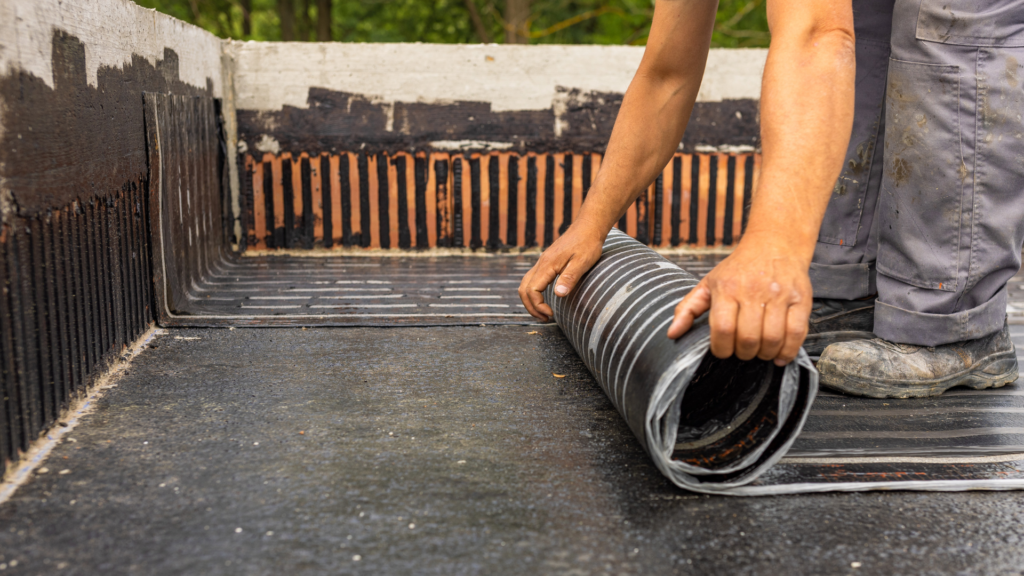
When done correctly, roof waterproofing creates a full protective barrier system that:
- prevents water from entering roofing layers
- controls runoff during heavy rainfall
- protects structural materials beneath the surface
- reduces long-term moisture absorption in the building
But more importantly, it protects everything below the roof including walls, living spaces, and the basement.
Because once the roof is sealed properly, the entire water movement pattern inside the building changes.
How roof protection directly reduces basement problems?
This is the part most people miss.
A properly waterproofed roof doesn’t just stop leaks upstairs it reduces pressure and moisture movement throughout the entire building.
That means:
- less water traveling through walls
- reduced internal humidity
- lower risk of hidden structural dampness
- fewer basement moisture problems over time
Think of your home as one connected system. If the top is weak, the bottom suffers.
Why you should think of your home as one water system?
One of the biggest mistakes homeowners make is treating roof issues and basement issues as separate problems.
But water doesn’t think in sections it follows a path.
In most NYC homes, that path looks like this:
Roof → walls → internal structure → basement
So real protection works the same way:
- block water at the roof level
- prevent movement through structural paths
- manage moisture at the basement level
When all three areas are protected together, water has nowhere to build up.
Final thoughts
If your basement keeps showing signs of moisture, dampness, or musty smell, don’t assume the problem is only underground.
In many NYC homes, the issue starts much higher quietly entering through the roof and moving downward over time.
Roof waterproofing is not just about preventing leaks above your head.
It is about protecting the entire structure below it.
Because in real conditions, water doesn’t stay where it enters. It moves and it always ends up at the weakest, lowest point. And in most homes, that point is the basement.
Want to discuss your water roofing issue with an expert?
Frequently Asked Questions
Can roof leaks really cause basement water problems?
Yes, roof water can travel through walls and structural gaps. It slowly moves downward due to gravity over time. Eventually, it can show up as basement dampness or leaks.
What are the early signs of roof waterproofing issues?
Ceiling stains, peeling paint, and mold are common signs. You may also notice musty smells spreading between floors. These often indicate hidden roof moisture intrusion.
Why does roof water reach the basement in NYC homes?
NYC buildings often have aging masonry that absorbs moisture. Water moves through walls, pipes, and structural joints downward. Basements become the final collection point.
Why do roof waterproofing systems fail?
They often fix surface cracks without addressing root drainage issues. Poor maintenance and clogged outlets worsen water buildup. Harsh NYC weather also breaks down weak coatings quickly.
How does roof waterproofing help protect basements?
It stops water entry at the top of the structure. This reduces internal moisture and downward water movement. It helps prevent basement dampness and recurring leaks.